Brotato Primal Dread Map Layout: Jungle Arena Guide, Waves, and Survival Tips
A practical breakdown of the Brotato Primal Dread map layout: how the new jungle arena is structured, its 20-wave flow, obstacle and spawn behavior, and positioning tips for surviving the prehistoric threats.
What Is the Primal Dread Jungle Map?
Primal Dread is the newest expansion for Brotato, developed by Evil Empire together with Blobfish Games and released on November 2, 2026. Instead of returning to familiar ground, the six-armed potato emerges from the abyss and lands in a hostile, prehistoric jungle teeming with mutated and cyber-enhanced predators, according to IGN's official game overview.
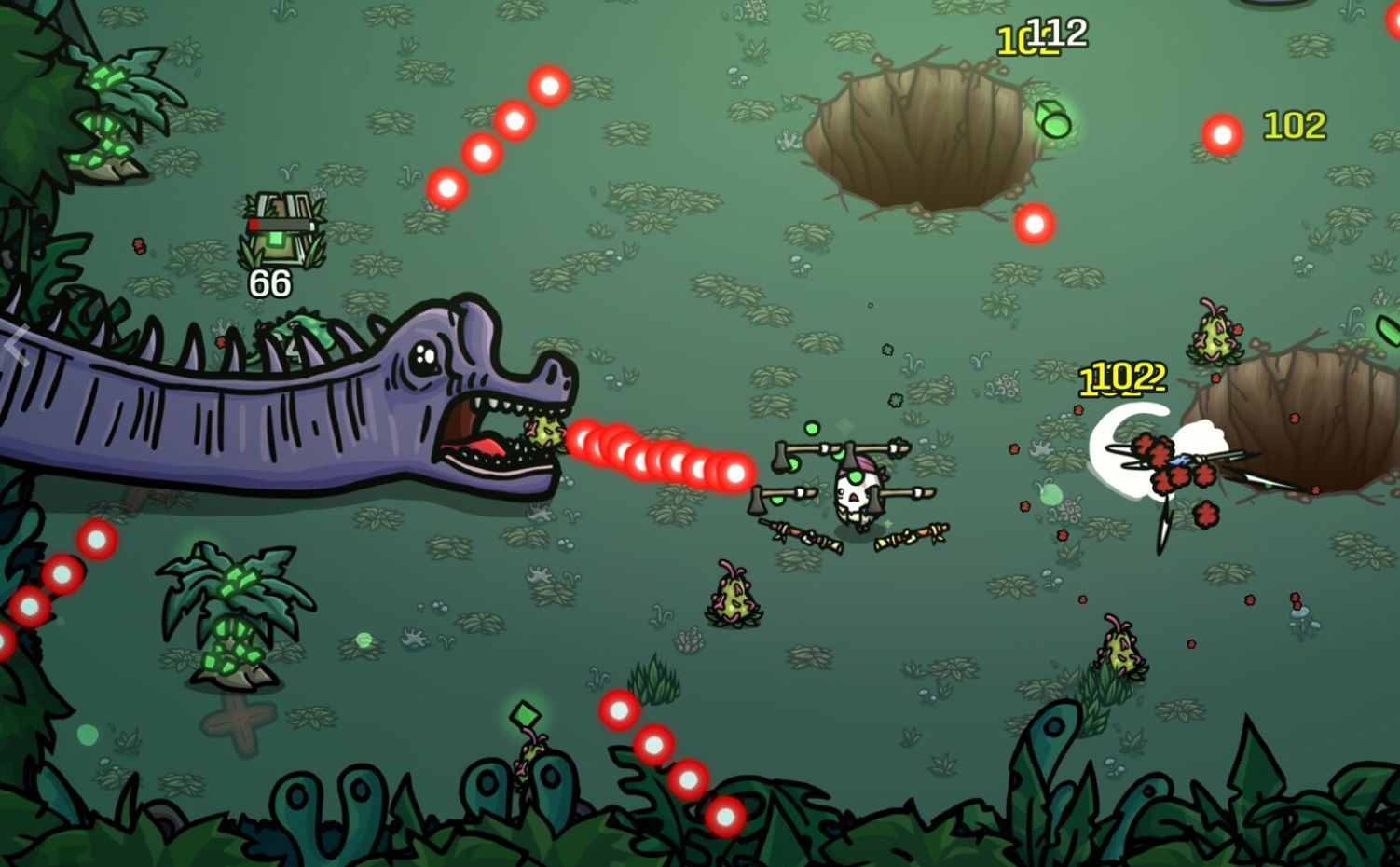
For players searching for the Brotato Primal Dread map layout, the short version is this: the new Jungle map keeps the series' signature bounded, single-arena structure, but layers dense foliage, dino-themed enemy spawns, and a new evolution mechanic on top of it. Launch coverage from Rogueliker and early gameplay showcases confirm the jungle setting, 20 waves of new enemies, elite encounters, and boss fights as the core of the experience.
Brotato Primal Dread Map Layout Basics
Brotato has never been a game about memorizing fixed corridors. Every arena is a procedurally populated combat space, and the Primal Dread map follows that same design philosophy. What changes from map to map is the dressing, obstacle density, and the threats spawned into the space — not the fundamental shape of the battlefield.
Here is how the jungle arena breaks down in practice:
| Layout Element | What to Expect in Primal Dread |
|---|---|
| Arena shape | One open, bounded combat zone per wave, consistent with past Brotato maps |
| Obstacles | Jungle-themed blockers (trees, rocks, foliage) that restrict movement and can be cleared |
| Pickups | Crates and material drops scattered across open ground each wave |
| Enemy spawns | Predators and mutants push in from the arena edges as waves scale |
| Boss space | Elites and bosses appear during the 20-wave run, demanding open lanes to kite |
Because the layout is dynamic rather than fixed, "learning the map" in Primal Dread really means learning how the space behaves: where obstacles cluster, how spawns flow, and how much open ground you can preserve for dodging.
Wave Progression, Elites, and the Evolution Stat
The jungle map runs through 20 waves of brand-new enemies, culminating in deadly elite and boss battles, as highlighted in the official gameplay showcase. A rough mental model of how pressure builds across the run:
- Early waves (1–7): Lighter spawn density. Use the open ground to destroy obstacles, open crates, and build your economy before the jungle gets crowded.
- Mid waves (8–14): Mutated predators arrive in larger packs. Obstacles become liabilities as kiting room shrinks.
- Late waves (15–20): Elites and bosses dominate the arena. Clear sightlines and open lanes matter more than any single item purchase.
The biggest wrinkle to the layout is the new evolution stat. Depending on your character and build, the dino-themed adversaries shift form — Rogueliker's hands-on report describes a Droid run where the dinosaurs transformed into mecha-beasts, unlocking upgradeable weapons via microchips. Slimeball mutations represent the other evolutionary branch. Your build effectively reskins and retools the threat population you face within the same jungle arena.
Positioning Tips for Surviving the Jungle Arena
The layout rewards players who actively manage space. Since the arena is shared with obstacles and dense jungle dressing, careless movement gets you pinched against foliage with predators on every side.
Practical tips for reading the Brotato Primal Dread map layout wave by wave:
- Clear obstacles early. Destroying jungle blockers in the first waves opens kiting lanes you'll desperately need at wave 15 and beyond.
- Fight in the center when possible. Edges compress your escape routes; the middle of the arena gives you 360 degrees of dodge space.
- Never let elites corner you. Bosses and elites in Primal Dread punish players who back into uncleared foliage.
- Adjust for ranged vs. melee builds. Ranged characters benefit most from long, clear sightlines; melee characters should still open up at least one rotating loop around the arena.
- Watch how the evolution stat changes enemy movement. Mecha-beasts and slime mutations behave differently in crowds — reposition accordingly when your run shifts direction.
Jungle Map vs. Previous Brotato Arenas
If you're deciding whether the new map justifies the expansion purchase, here's how the Primal Dread arena stacks up against what came before:
| Feature | Base Game Arena | Primal Dread Jungle |
|---|---|---|
| Theme | Classic fields | Hostile prehistoric jungle |
| Enemy roster | Original cast | 20 waves of new dino-themed, mutated, and cyber-enhanced enemies |
| Special mechanic | Standard stat system | Evolution stat that transforms enemies per run |
| Endgame content | Standard elites/bosses | New deadly elites and boss battles |
| Supporting content | Base weapons/items | 10 new characters, 17 new weapons, 40 new items, new music |
The jungle arena itself is only part of the package — the expansion ships alongside 10 new characters (including a time-stopping survivor and the Archaeologist, a nod to Sam Neill), plus the gear needed to master the evolving threat, per Rogueliker's launch coverage.
How to Access the Primal Dread Map
Access is straightforward but currently limited by platform:
- PC: Primal Dread is available now on Linux, Mac, and Windows storefronts.
- Console: Not yet — console players will have to wait until next year, as confirmed in October 2026.
- Toggle control: The free 1.2 update that launched alongside the expansion adds an Item Set menu, letting you switch expansions and updates on or off. If you toggle Primal Dread off, the jungle map and its content are excluded so you can play the base game exactly like it was in 2022.

Frequently Asked Questions
Is the Brotato Primal Dread map layout fixed or procedural?
Like all Brotato arenas, the jungle map is procedurally populated rather than a hand-built, static level. The core structure is one bounded combat zone per wave, with obstacle placement, crates, and spawn patterns varying from run to run.
How many waves does the Primal Dread jungle map have?
The jungle map runs 20 waves of new enemies, including deadly elite encounters and boss battles spread across the run.
Does the evolution stat change the map itself?
No — the evolution stat changes the enemies inside the arena, not the geography. Depending on your character, the dino adversaries evolve into mecha-beasts or slimeball mutations, which alters how threats move through the same jungle space.
Can I turn the jungle map off?
Yes. The free 1.2 update's Item Set menu lets you toggle the Primal Dread expansion on and off, so you can play with or without the jungle content at will.
Is the Primal Dread map on consoles?
Not yet. As of the November 2, 2026 launch, the expansion is PC-only, with console versions planned for the following year.
Guides associés
Carte de la jungle de Brotato Primal Dread : guide complet du nouveau niveau du DLC
Tout ce que nous savons sur la carte de la jungle de Brotato Primal Dread, y compris ses 20 vagues, ses nouveaux ennemis, élites et boss, le contenu du DLC, le prix et les conseils de survie.
Dangers de la carte Brotato Primal Dread : toutes les menaces environnementales expliquées
Un guide complet des dangers de la carte Brotato Primal Dread, couvrant la pluie de projectiles, les vagues d'obscurité, les attaques environnementales et les meilleures façons de survivre à la nouvelle carte jungle.
Déblocage de la carte Brotato Primal Dread : comment accéder à la nouvelle carte jungle
Un guide complet sur le déblocage de la carte Brotato Primal Dread : comment obtenir la carte jungle, ce qu'elle contient et des conseils pour survivre à ses 20 vagues.
Disposition de la carte Primal Dread de Brotato : guide de l'arène jungle, vagues et conseils de survie
Un décryptage pratique de la disposition de la carte Primal Dread de Brotato : structure de la nouvelle arène jungle, déroulé des 20 vagues, comportement des obstacles et des apparitions, et conseils de positionnement pour survivre aux menaces préhistoriques.